
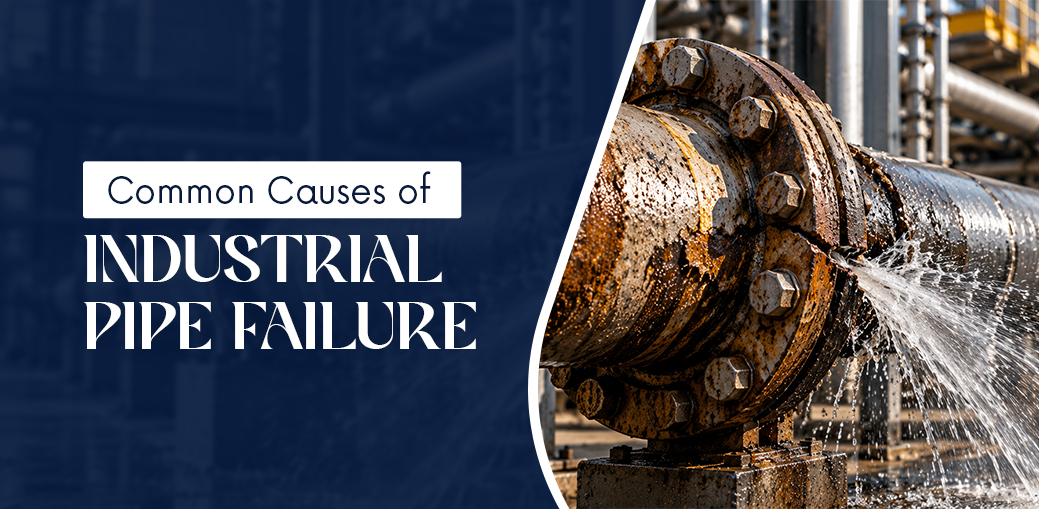
Industrial piping systems are essential for transporting liquids, gases, and process materials across manufacturing facilities, power plants, refineries, and other industrial environments. Pipe failure can result in production interruptions, maintenance expenses, material loss, and safety risks. Understanding the common causes of industrial pipe failure helps businesses take preventive measures and improve long-term system reliability.
Corrosion and Material Deterioration
Corrosion is one of the leading causes of industrial pipe failure. Exposure to moisture, chemicals, and aggressive operating conditions can gradually weaken pipe walls, increasing the risk of leakage or structural damage. Selecting suitable piping materials, such as appropriate stainless steel or carbon steel grades, helps reduce corrosion-related risks.
Excessive Pressure and Mechanical Stress
Industrial pipes are designed to operate within specified pressure and temperature limits. Exceeding these limits or exposing pipes to repeated mechanical stress can compromise their integrity.
Pressure Surges
Sudden pressure changes, including water hammer, can place excessive stress on pipes, fittings, and joints, potentially causing leakage or damage.
Vibration and Fatigue
Continuous vibration from industrial equipment can weaken piping connections over time, particularly when supports and alignment are inadequate.
Thermal Expansion
Temperature fluctuations can cause pipes to expand and contract. Without appropriate flexibility and support, this movement may create additional mechanical stress.
Incorrect Material Selection and Installation
Using pipes that are incompatible with operating fluids, temperatures, or pressure conditions can accelerate deterioration. Poor welding, improper joint assembly, inadequate support, and installation misalignment can also increase failure risks. Selecting suitable materials and following approved installation procedures are essential for maintaining piping integrity.
Importance of Preventive Maintenance
Regular inspection and maintenance help identify potential problems before they develop into major failures. Monitoring corrosion, leakage, pressure fluctuations, and damaged supports allows maintenance teams to address issues early. Using quality pipes, fittings, and valves also contributes to reliable industrial piping performance.
Conclusion
Industrial pipe failure can result from corrosion, excessive pressure, mechanical stress, unsuitable materials, and poor installation practices. Understanding these causes and implementing preventive maintenance measures can help reduce operational interruptions, improve safety, and extend piping system service life.
Find reliable industrial pipes, fittings, and valves at A. Karimjee & Sons.