
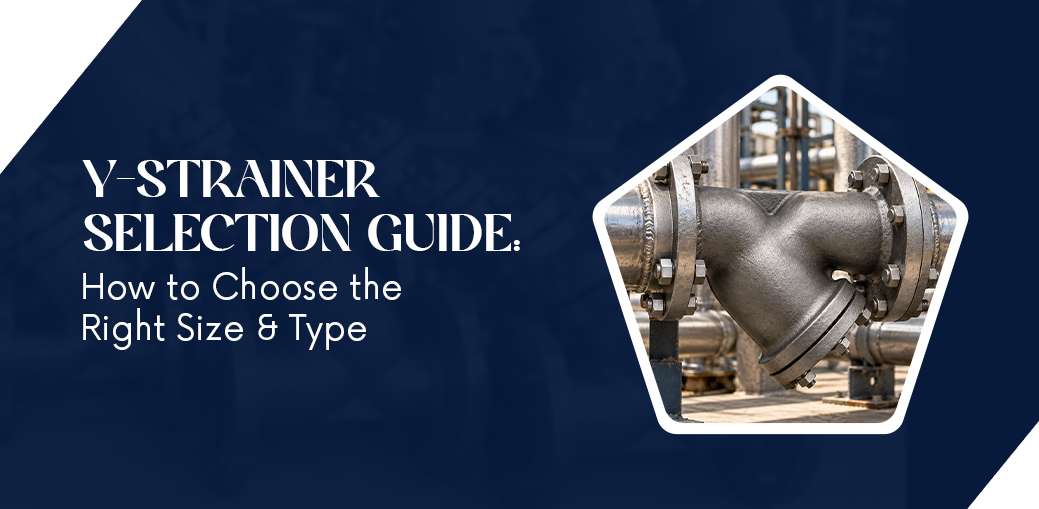
Y-strainers are essential components in industrial piping systems, designed to remove unwanted solid particles from flowing liquids and gases. By preventing debris from reaching sensitive equipment, they help protect pumps, valves, and other process components from damage. Selecting the correct Y-strainer size and type is important for maintaining flow efficiency, reducing maintenance requirements, and ensuring reliable system performance.
Understanding How Y-Strainers Work
A Y-strainer uses a specially designed body containing a removable screen or mesh that captures solid particles as fluid passes through the pipeline. The collected debris can be removed during maintenance, helping prevent blockages and damage to downstream equipment. Y-strainers are commonly used in water treatment, chemical processing, steam systems, and other industrial applications.
Factors to Consider When Selecting a Y-Strainer
Choosing the correct Y-strainer requires evaluating several operating conditions and system specifications.
Pipe Size and Flow Rate
The strainer should be compatible with the pipeline dimensions and designed to accommodate the required flow rate without creating excessive pressure loss.
Material Selection
Common Y-strainer materials include cast iron, carbon steel, and stainless steel. The appropriate material depends on fluid compatibility, operating temperature, pressure, and corrosion exposure.
Screen Mesh Size
Finer screens capture smaller particles but may increase pressure drop and require more frequent cleaning. The correct mesh size depends on the filtration requirements of downstream equipment.
Pressure and Temperature Ratings
The selected Y-strainer must be suitable for the system’s operating pressure and temperature to maintain safe and reliable performance.
Different Types of Industrial Y-Strainers
Y-strainers are available in several configurations to accommodate different piping requirements. Threaded Y-strainers are commonly used in smaller pipelines, while flanged models are suitable for systems requiring bolted connections. Stainless steel Y-strainers are often selected for applications requiring corrosion resistance, while cast iron and carbon steel models are used in suitable industrial utility systems.
Importance of Proper Installation and Maintenance
Correct installation helps maintain strainer efficiency and prevents unnecessary pressure loss. Y-strainers should be installed according to the manufacturer’s flow direction and orientation requirements, with sufficient access for screen removal. Regular inspection and cleaning help prevent excessive debris accumulation and maintain consistent system performance.
Conclusion
Selecting the right Y-strainer involves considering pipe size, flow rate, material compatibility, screen specifications, and operating conditions. Proper selection, installation, and maintenance help protect industrial equipment, minimize downtime, and support efficient piping operations.
Explore industrial Y-strainers and piping solutions at A. Karimjee & Sons.