
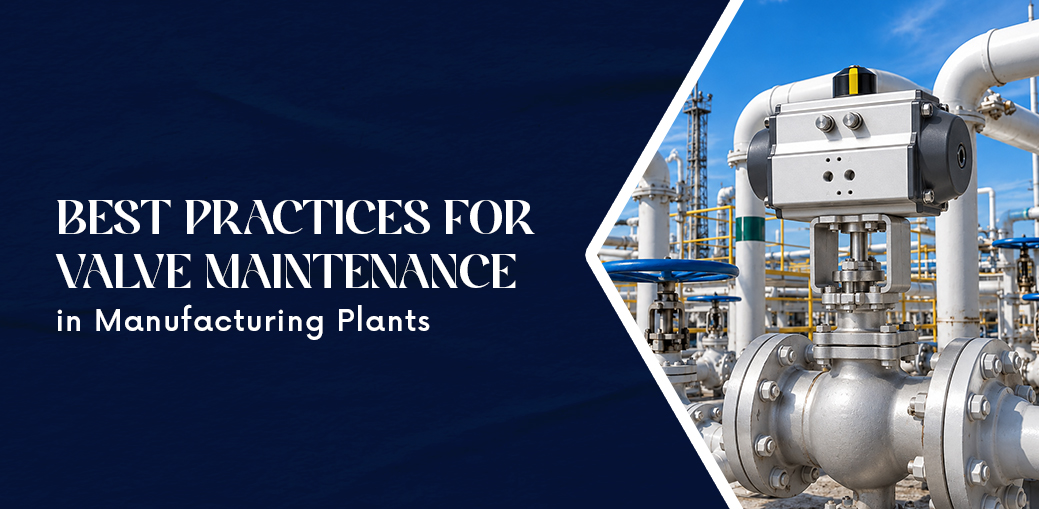
Valves play an important role in manufacturing plants by controlling the movement, pressure, and direction of fluids and gases throughout a piping system. Because they are used continuously in demanding operating environments, regular valve maintenance is essential for keeping processes reliable and reducing unexpected shutdowns.
A well-planned maintenance routine can help identify problems before they become major failures. It also supports safer operations, improves equipment performance, and can extend the service life of valves and connected piping components.
Inspect Valves Regularly
Regular inspection is one of the simplest ways to identify early signs of valve problems. Maintenance teams should check valves for visible leakage, corrosion, unusual noise, vibration, damaged components, and signs of wear around connections.
The inspection should also consider the valve’s operating condition. A valve that is difficult to open or close, does not provide proper flow control, or requires unusual force may indicate an underlying mechanical or operational issue.
Check for Leakage
Even a small leak can become a larger problem if it is ignored. Leakage around the valve body, stem, flange connections, or other sealing points should be investigated promptly.
For process lines carrying high-pressure, high-temperature, or hazardous media, leakage requires particular attention. Maintenance personnel should follow the plant’s safety procedures before inspecting or working on the valve.
Keep Valves Clean and Properly Operated
Dirt, dust, deposits, and process residue can affect valve operation, particularly in systems where valves are exposed to harsh environments or contaminated fluids.
Keeping accessible valve components clean can make inspections easier and help prevent external buildup from affecting moving parts. Operators should also avoid forcing a valve beyond its intended operating position.
Inspect Seals, Connections, and Moving Components
Valve performance depends heavily on the condition of its sealing and mechanical components. During scheduled maintenance, teams should examine packing, gaskets, bolts, stems, actuators, and other relevant components for signs of deterioration.
Flanged connections should also be checked for looseness or leakage. Where replacement is required, components should be selected according to the valve specification and operating conditions rather than simply choosing a generic replacement.
For actuated valves, maintenance should also include the actuator and associated control components. A valve may be mechanically sound but still fail to operate correctly if its actuator or control system is not functioning properly.
Conclusion
Effective valve maintenance is a combination of regular inspection, correct operation, timely repairs, and proper documentation. By monitoring valve condition and addressing small problems before they develop into major failures, manufacturing plants can improve system reliability, reduce unplanned downtime, and maintain safer and more efficient operations.
For reliable valve solutions and industrial flow-control products, visit https://akarimjee.com.
For inquiries, pricing, and bulk orders, contact us: 021-32422431