
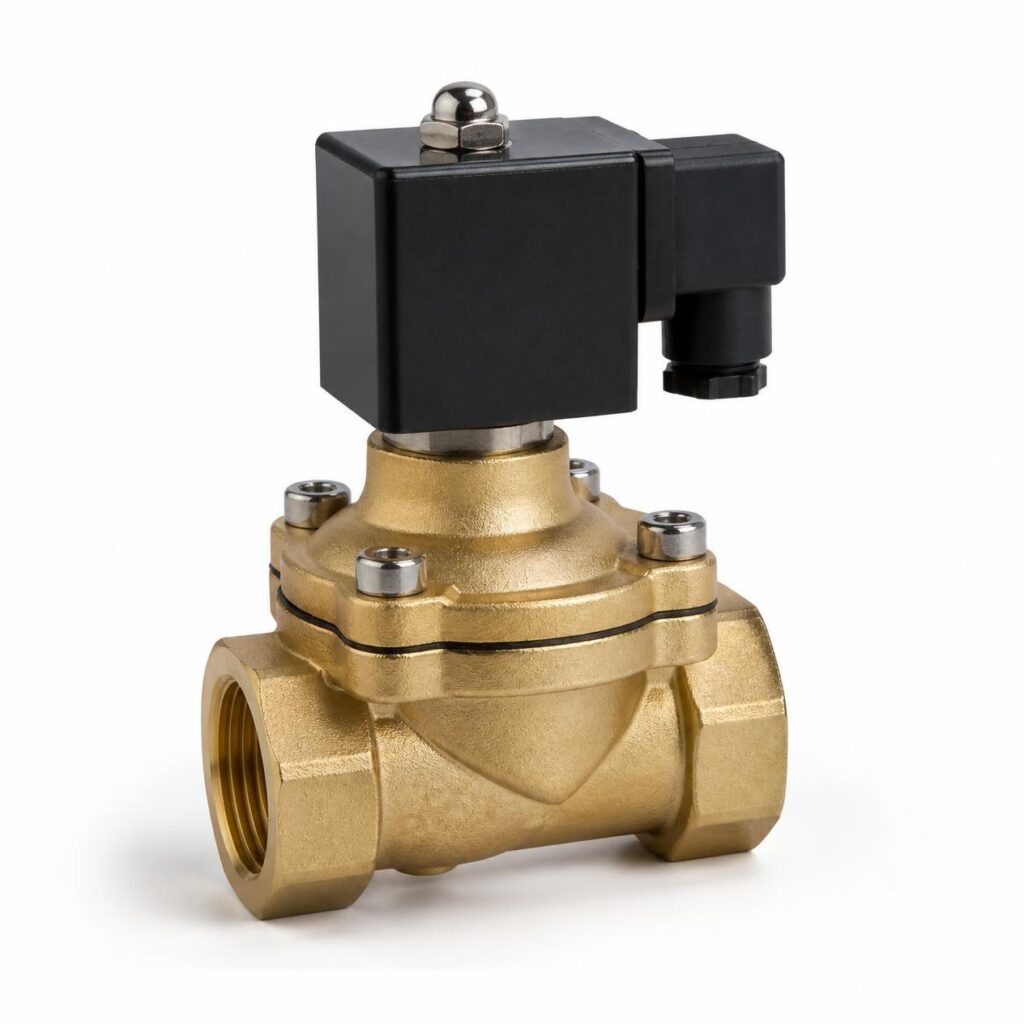
Diaphragm Solenoid Valves
Diaphragm solenoid valves use line pressure to lift a flexible diaphragm, so a small coil can control large flows. They are widely used for water, air and pulse-jet dust collector cleaning.
We supply pilot-operated diaphragm solenoid valves in brass, stainless steel and aluminium, including right-angle and straight-through pulse-jet valves with integral or remote pilot.
Specifications
| Product name | Diaphragm Solenoid Valve |
|---|---|
| Valve type / design | Pilot-operated diaphragm, 2/2-way, normally closed; straight or right-angle (pulse jet) |
| Body material | Brass, SS304 / SS316 or die-cast aluminium body; NBR, EPDM or FKM diaphragm |
| Size range | ½" to 3" (DN15 – DN80) |
| Pressure rating | 0.3 – 10 bar typical (minimum differential required) |
| End connections | Threaded BSP / NPT; dresser nut (pulse jet) |
| Standards | IEC 60529 (IP65) coil |
| Applications | Dust collectors, water, compressed air and irrigation |
Industrial uses
- Dust collectorsPulse-jet valves for cleaning bag filters and cartridges.
- Water treatmentLarge-flow automatic fill and drain valves.
- Compressed airHigh-flow air control and blow-off.
- IrrigationAutomatic zone valves.
- Cement & power plantsBaghouse filter cleaning systems.
Frequently asked questions
How does a diaphragm solenoid valve work?
The coil opens a small pilot port, which releases pressure above the diaphragm. Line pressure then lifts the diaphragm and opens the main flow path.
What is a pulse-jet valve?
A fast-acting diaphragm valve that releases short, high-energy blasts of compressed air to clean filter bags in dust collectors.
Why does it need a minimum pressure?
The diaphragm is opened by line pressure, so below the minimum differential (often around 0.3 bar) it won't open fully.
Can the diaphragm be replaced?
Yes. Diaphragm repair kits are available, so worn valves can be restored without replacing the body.