
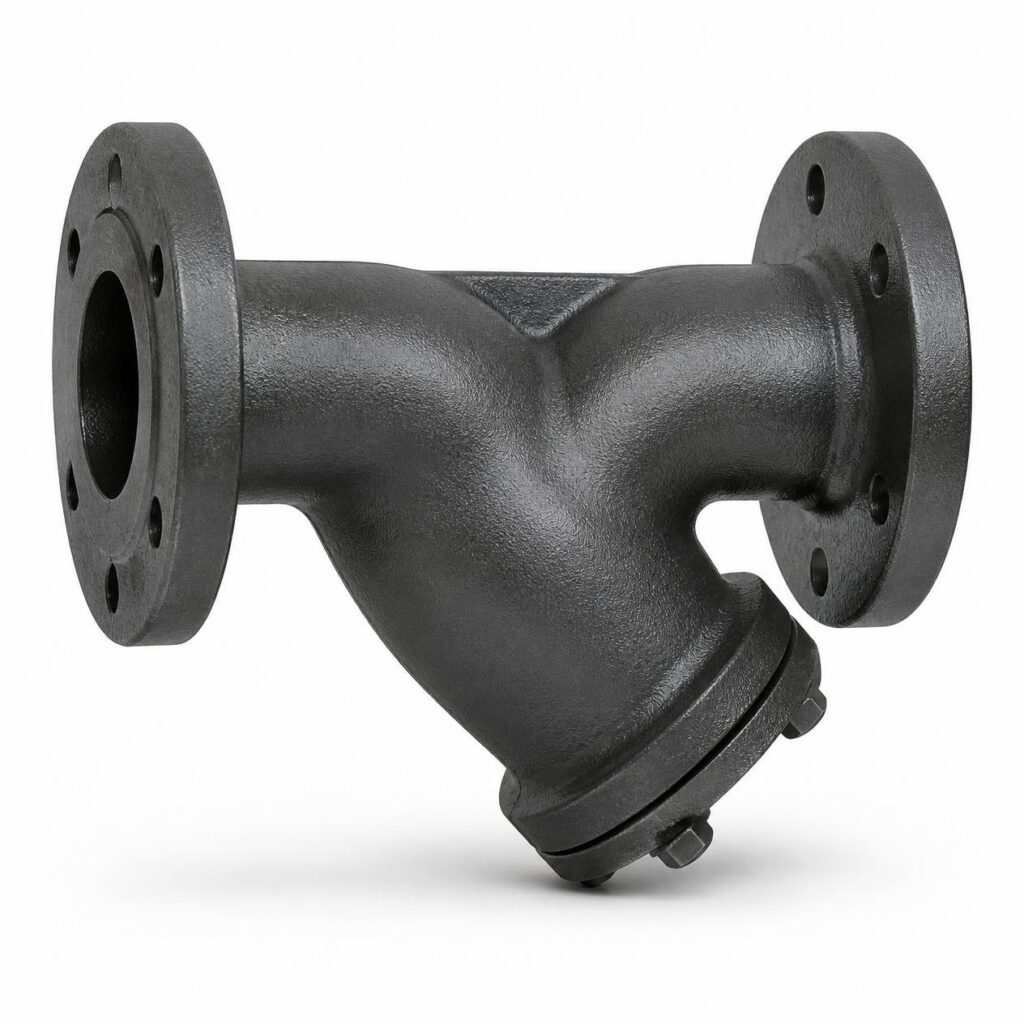
Cast Iron Y-Strainers
Cast iron Y-strainers catch rust, scale and debris in the line before they reach pumps, control valves, meters and steam traps. The angled screen chamber can be cleaned through a blow-off cap without removing the strainer.
We supply flanged cast iron and ductile iron Y-strainers with stainless steel screens in a range of mesh sizes for water, steam and HVAC service.
Specifications
| Product name | Cast Iron Y-Strainer |
|---|---|
| Valve type / design | Y-pattern strainer with removable screen and blow-off connection |
| Body material | Grey cast iron EN-GJL-250 / ASTM A126 Class B; ductile iron EN-GJS-400; SS304 / SS316 screen |
| Size range | ½" to 12" (DN15 – DN300) |
| Pressure rating | PN16; ASME Class 125 / 250 |
| End connections | Flanged (EN 1092-2 PN16 or ASME B16.1) |
| Standards | ASME B16.1 / EN 1092-2 flanges, manufacturer test standard |
| Applications | Pump suction, steam, HVAC and water lines |
Industrial uses
- Pump protectionKeeping debris out of pump impellers and seals.
- Steam linesProtecting traps, pressure reducing and control valves.
- HVACProtecting chillers, coils and balancing valves.
- Flow metersPreventing blockage and damage to meters.
- Water systemsFiltering scale and sediment on supply lines.
Frequently asked questions
What mesh size should I choose?
Typical choices are 20 mesh for water and 40 to 100 mesh (perforated plus mesh liner) for steam and fine protection. Finer mesh catches more but clogs faster, so match it to the equipment being protected.
How should a Y-strainer be installed?
Follow the flow arrow. In horizontal pipes, point the screen leg downward for liquids, and sideways (horizontal) in steam or gas lines so condensate doesn't collect in the screen.
How do I clean it?
Isolate the line, remove the cap and screen, clean and refit. A blow-off valve on the cap lets you flush debris without dismantling.